
From PCR to Precision: The Crucial Role of Primers in Molecular Biology
Discover the crucial role of primers in molecular biology, powering DNA replication, cloning, and gene expression analysis.
Introduction
Molecular Biology is a field of life sciences, that deals with study and understanding of life at molecular level using technologies. This involves structure study of macromolecules (nucleic acids, lipids, carbohydrates and proteins), interaction between them, and how they play an important role in administering the fundamentals of life like, DNA replication, gene expression, and protein synthesis. This works as a bridge between different subfields, such as Biochemistry, Biophysics, Genetics and Cell Biology.
The Obstacle: How to study at the Angstrom (A°) level?
However, studying these molecules in their native conditions was impossible to begin with, as the size of the molecules is at angstrom (A°) level and the vastness of the molecules also made it difficult in the 1900s. This is where primers play an important role. And these primers are not something invented by humans; they have been present in nature since the dawn of life on planet Earth. These are small stretches of single-stranded nucleotide sequences (4-2 nt) present in cells, that are key components of DNA replication.
In the years between 1960 and 1970 these were first synthesized by Har Gobind Khorana and Kary Mullis in the 1980s. The conceptual groundwork was laid by Arthur Kornberg in the mid-1950s, by discovering the DNA polymerase enzyme, which requires a pre-existing nucleotide chain to elongate and duplicate the DNA molecule.
The Solution
The discovery of DNA polymerase enzymes and DNA primers revolutionized the molecular cloning technique, which depended on Restriction Endonucleases and DNA ligase enzymes.
What is the Molecular Cloning Technique?
Molecular Cloning is a wet-lab technology, which is used to create identical copies of a particular gene segment within a host organism. This technique involves a number of steps, which includes the introduction of our gene of interest into a self-replicating molecule, known as “vector” and then inserting the resulting molecule into a foreign organism. This results in the generation of a population of organisms with the gene of our interest in the form recombinant DNA (rDNA).
How do primers make cloning more precise?
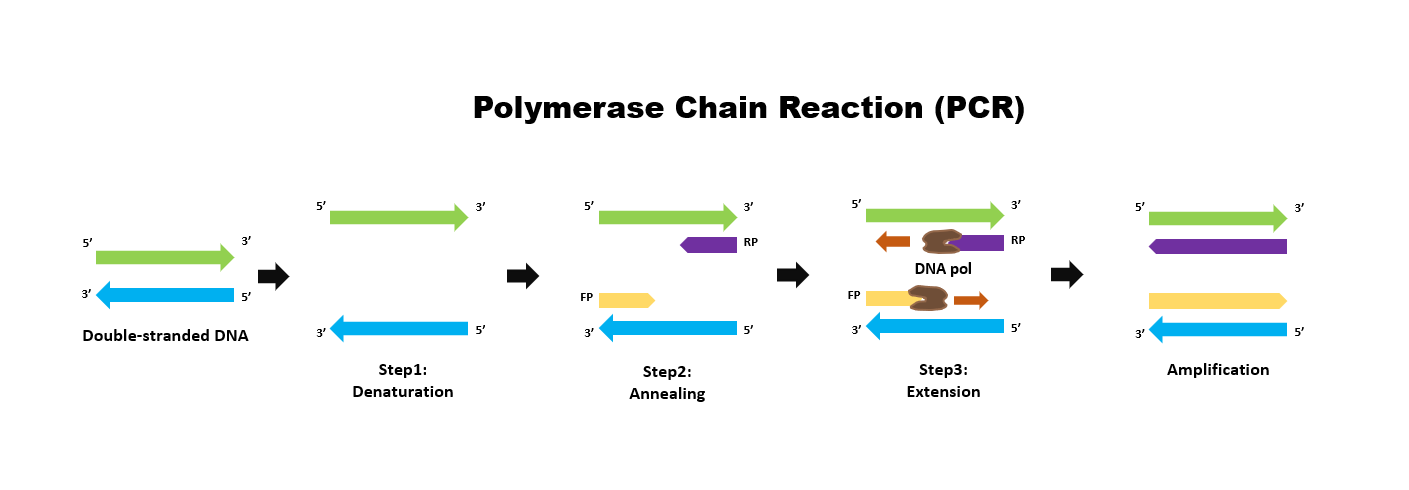
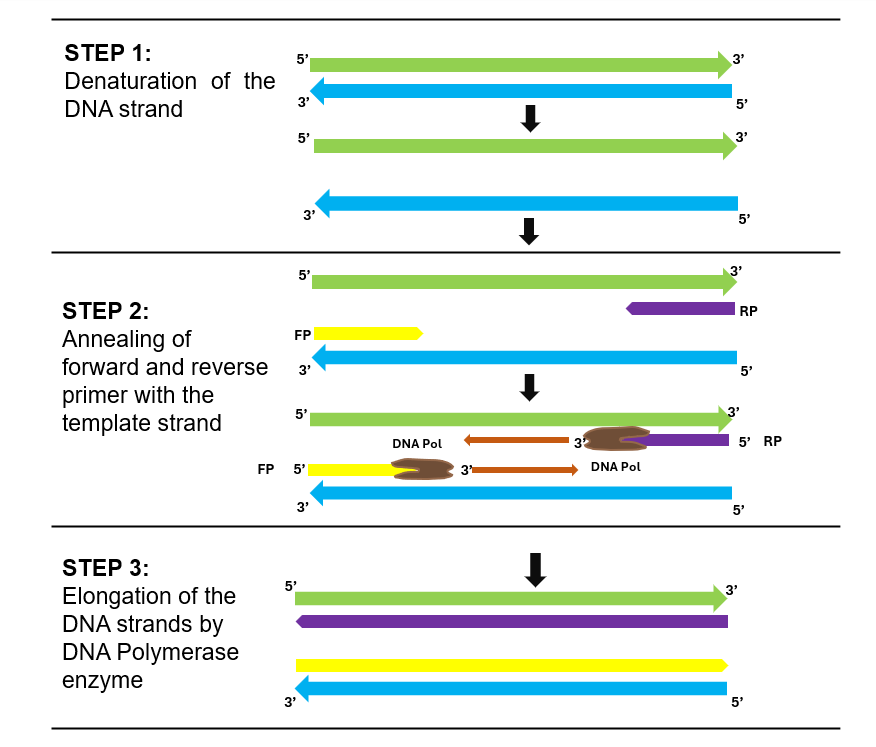
In the PCR-based molecular cloning technique, a primer set (forward and reverse primer) is used to amplify the targeted gene to be studied. They bind to the target regions in the template strands and prime the elongation step by the polymerase enzyme.
To design a set of primers, the gene which you want to amplify must be determined beforehand. There are different public databases, which contains updated gene specific sequences corresponding to the organism. We can acquire the data from these portals and design the primers according to the targeted region.
The designed primers should consist with the primary characteristics, such as the length limited to 18-25 nt, the differences in the Tm values should not be more than 2°C and the overall GC content ranges up to 40-60%. These parameters can be verified using various bioinformatics tools. After obtaining an ideal pair of primers set, we can synthesize these primers in labs and further use for the PCR.
Applications of DNA Primers
Let us briefly discuss the significance of primers in Biotechnology other than PCR:
I. Reverse Transcription- PCR (RT-PCR)
RT-PCR is a technique, used to detect and quantify the gene expression by amplifying RNA transcripts. In this technique primers are used to create complementary DNA (cDNA) from RNA molecules using reverse transcriptase enzyme.
II. Gene Expression Analysis
Optimized primers amplify cDNA from RNA samples specific to the gene of interest through RT-PCR and q-PCR techniques. Optimized primers facilitate gene expression analysis by accurately quantifying gene expression levels. Further modified primers such as, quenchers, and probes increase the sensitivity and specificity of the probe-based RT- PCR and q-PCR techniques.
III. Cloning
The cloning technique uses optimized primers to amplify targeted genes on organism level, which plays an important role in protein overexpression. These overexpressed proteins are used for further studies, such as Biochemical and Biophysical studies.
IV. Site-Directed Mutagenesis
To prepare mutated proteins for different functional studies mutations were incorporated in the primers and then synthesized to. These mutated primers enable precise modification of DNA sequences, which express the desired mutated proteins.
V. In Situ Hybridization (ISH)
ISH is a method used for gene expression analysis, chromosome mapping, and studying the cellular localization of nucleic acids. This technique uses labelled primers (labelled with several tags, such as fluorescent tags) to visualize nucleic acid sequences within cells or tissues.