Inside the Molecular War: How Plants Fight Pathogens to Protect Our Food.
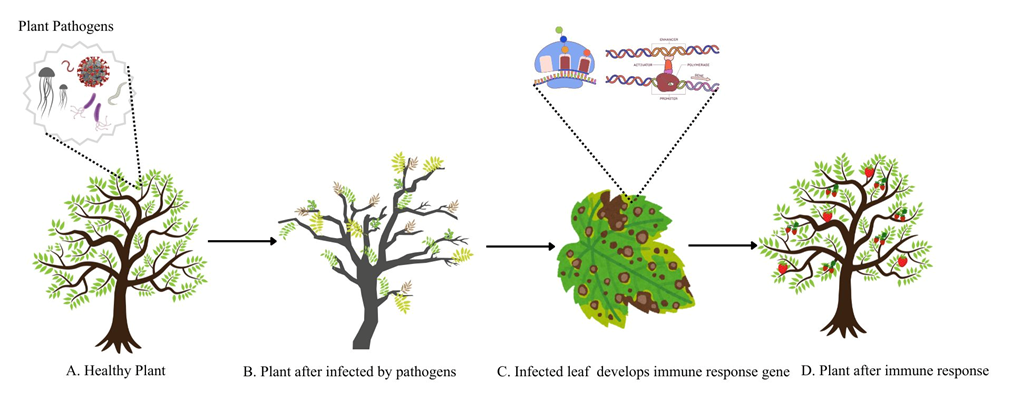
Plants are always calm and silent, but an immune response always active inside them. Microbial bodies attempt to enter the plant and make it sick. Under such conditions, the plant immune system recognizes and tries to evade this attack. This constant fight between plants and microbes is called plant-pathogen interaction. If a strong defense mechanism is working in the plant, it may survive and grow healthily; otherwise, it becomes weak and reduces crop productivity.
Ramesh is a farmer whose daily life depends on farming crops for the smooth survival of his family. Each season he prepares his field with a balanced nutritional bio-fertilizer for better growth. To avoid low productivity, he always takes care of the crops and protects them from environmental enemies (such as animals, insects, mites etc.)
One day, Ramesh moves towards his field in the early morning, holding a cup of tea. This quiet walk was part of his daily ritual. In the early morning, water droplets rested on the leaves, and for a moment, everything felt still. He moves closer to silence and stalks for a moment. Some brown spots were marked on several leaves, and a few plants appeared weak, and tired. “They all were healthy just a day before,” he said softly.
Why are Some Plants Healthy?
Ramesh was surprised that not all plants were affected. Some plants appear green and strong next right to the infected plants. What is the scientific reason behind this?
Plants differ in their natural ability to detect and resist pathogens. Just like humans, some plants recognize danger earlier and respond faster, relying on their own internal defenses rather than external help.
What is plant pathogen?
A plant pathogen is an organism that can cause disease in plants. The organisms include Fungi, Bacteria, Viruses & Viroid's, Nematodes, Phytoplasmas, etc. Pathogens enter through natural openings (stomata, lenticels) or wounds or direct penetration using enzymes (cellulase, pectinase). These foreign organisms or pathogens are recognized through PAMPs (Pathogen-Associated Molecular Patterns) signal by plant receptors (PRRs).
Plants are Unguarded, but not Helpless
Since, plants develop in wilderness, fully subjected to their surroundings, they are unable to avoid threats or protect themselves from harms caused by other species. Pathogens move through wind, rain, soil, and insects while seeking hosts. Following such natural events like last night’s intense rainfall, a pathogen quietly landed on a leaf in Ramesh's field, trying to penetrate the plant for nutrients.
Defense Pathway: When the Plant Wins
We see that plants appear stationary, but they are biologically alert. As soon as the pathogens touch the leaf surface, the plant receptors detect the pathogen molecules and activate the first layer of defense known as PAMP-triggered immunity (PTI). Thus, strengthening its cell wall, and close entry points, and release antimicrobial chemicals. This rapid and energy-efficient response is often sufficient to stop weak pathogens.
Invisible Victories in the Field
In many cases, this defence system is successful. The pathogen fails to establish itself, dies, and the plant continues to grow normally, leaving no visible signs of the battle. Some plants in Ramesh’s field showed exactly this outcome, remaining healthy despite nearby infections. Such effective defence occurs because certain plants are genetically better prepared, activating additional defence genes when needed. Scientists study these resistance mechanisms using precisely designed primers and analyse the data through database management systems to improve crop varieties.
When Pathogens Fight Back
However, not all encounters end up in the plant’s favor. Some pathogens produce effector proteins that suppress PTI and disrupt plant signaling. When this transpires, the pathogen enters the plant and multiplies inside, thus infecting the plants. In response to this the plants fight back with a stronger defence system called Effector-Triggered Immunity (ETI), which may include localized cell death to limit spread. If this response is delayed or insufficient, the plant weakens, leaves discolour, growth slows down, and symptoms of the disease become visible, as Ramesh observed.
When Conditions Tip the Balance
Environmental conditions strongly influence the outcomes. High humidity, warmth, and prolonged rainfall create ideal conditions for pathogen growth and spread. Constant rainfall keeps the weather wet, increasing disease pressure and tipping the balance toward several pathogenic infections. Therefore, farmers closely monitor weather patterns, knowing they not only affect the growth and production of crops, but also the risk of occurrence of diseases in the plants.
Prevention Over Cure
Later that week, Ramesh spoke with an Agricultural Officer and learned a key lesson: preventing a disease is far more effective than reacting to it. Healthy soil, clean fields, proper spacing, using disease-resistant and certified seed varieties strengthen plant immunity. For more clarification we should attend agricultural training programs, regularly monitor the field and early detection of diseases, maintain soil health and balanced nutrition.
Why These Battles Matter
The outcomes of these silent battles extend far beyond individual fields. When plants lose, yields decline, food prices rise, and livelihoods suffer. When plants win, harvests remain stable, farmers prosper, and food security is protected. Every grain of rice and every vegetable on our plate reflects the result of countless unseen molecular struggles.
The following season, Ramesh planted stronger and more resilient crops. His field looked healthier, and losses were fewer. The battle had not ended, but this time, the plants were better prepared.
The Hidden War Beneath Green Fields
Plants fight every day against disease, weather, insects, and poor soil. They do this quietly, without being noticed. The next time you see a green field or a small potted plant, remember that beneath the calm surface lies a constant struggle that protects farmers, food systems, and all of us.