The Metabolic Cost of a Sedentary Lifestyle: From Desk to Bed
Prolonged sitting quietly disrupts metabolic health, leading to insulin resistance and rising diabetes risk. This story explains how small daily movements and data-driven health approaches can restore balance.

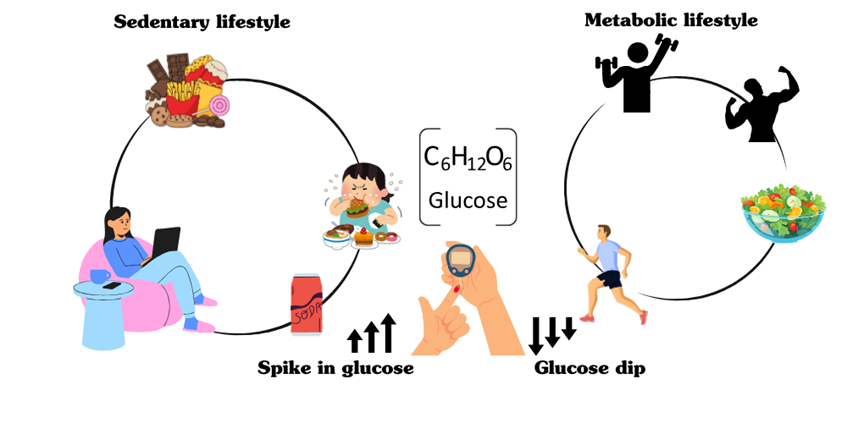
In our day-to-day life, sedentary living is one of the most unrecognized public health problems. Most of the people believe the only issue with modern life is “not exercising enough.” But the reality hits much deeper. Sitting idle slows down metabolic activity of the body without any clear indications.
It’s about a day that doesn’t looks normal!
Let me introduce you to Naina. She is 22 years old and professionally active. Her day-to-day tasks are familiar to many of us. Her day starts with 40 min seating in a cab followed by 8 hr of desk job. The return journey complements another 45 minutes sitting. After returning home, her time of refreshment is to chill on sofa with a burger and glass of coke. Occasionally cigarette gives her dopamine spike, for which she feels relaxed and happy. So far, there is no obvious signs or symptoms of disease. But without realising it, her body is silently paying a price. This makes us to think and ask ourselves, is this truly a healthy lifestyle or is it a metabolic debt gathering over time?
What actually happens deep inside our body when we sit idle?
We are all familiar with the fact that the largest muscles in our body are legs. These muscles are the main users of the blood glucose. When we are metabolically active through walking, standing or moving, these muscles help clear glucose from the bloodstream. If we sit idle for long hours the leg muscles are inactive. As a result, glucose remains in the bloodstream, insulin levels rise to manage it, and with time cells stop responding properly to insulin. This is the turning point. Once insulin resistance develops, blood sugar levels remain high and path towards diabetes begins!
Hunger hormones stop working properly
Many of us think gaining weight is a willpower issue. But biology tells a different story.
Two key hormones that complements each other and control appetite:
- Ghrelin signals hunger
- Leptin signals fullness and energy sufficiency
Sitting long hours reduce the brain’s response to leptin. Even when the body has enough stored energy, the brain behaves as if fuel is low. Hunger signals stay switched on. Same thing Naina also faced the same and started gaining weight. As a result, she has finally got the symptoms of Type2 diabetes. Her fat tissue starts releasing inflammatory chemicals that damage blood vessels and high blood pressure. Sedentary lifestyle along with the food’s habits push her body towards metabolic collapse.
The wake-up call!
It was a usual day, when Naina woke up and noticed something was wrong. Her vision was blurred and one of her eyes appeared slightly shifted to the side. Unfortunately, she was admitted to the hospital. Her random blood sugar report showed a level of 350 mg/dL, which was extremely high for her age. At this point she realized that willpower alone wasn’t enough to fight the situation. She needed awareness, regular monitoring, and smarter lifestyle choices.
Moving toward precision health and metabolic assessment
Advance health care approaches helped her understand her risk early and personalize her action. Among these, genome sequencing can reveal inherited risks linked to diabetes and metabolic disorders. Glucose patterns can be analyzed through AI-based screening tools which can track daily habits, glucose patterns and genetic input together. This allows earlier detection and better prediction, rather than waiting for visible damage to occur.
Can small changes restored balance?
The answer is yes. Naina did not start with intense workouts but began with walking 5 min every hour. These simple habits reactivate an enzyme called lipoprotein lipase, which clears fats from the blood. Finally, she brought a huge change in her diet plan. She replaced her junk food habits with protein-rich, whole foods. As a result, her body starts to burn more energy during digestion and improving overall metabolic efficiency.
Do Health span matters more than lifespan?
“A healthy mind lives in a healthy body." This proverb justifies the importance of maintain good health to keep free from chronic diseases. When metabolism stays balanced, body gives clear indication to reduce excess fat, lower inflammation and maintain stable blood sugar.
The real message
We don’t need more exercise time.
We need fewer hours surrendered to a chair.
Move often, Stand more. Walk regularly.
Don’t just survive the workday.
Build a body that still works well in your 80s and 90s.
Choose to be metabolically wealthy.